Written by Karrie Carlson, Upstream’s 2026 Grassroots Journalist Resident
For regional farmer David Nelson, healthier crops begin beneath the surface. Through Pedogenesis Premium Growing System Inc., he works with farmers to improve soil mineral balance, reduce reliance on agricultural chemicals, and grow food he believes is richer in flavor and quality.
David Nelson believes the future of farming begins with a question many growers may overlook: What is happening beneath the soil?
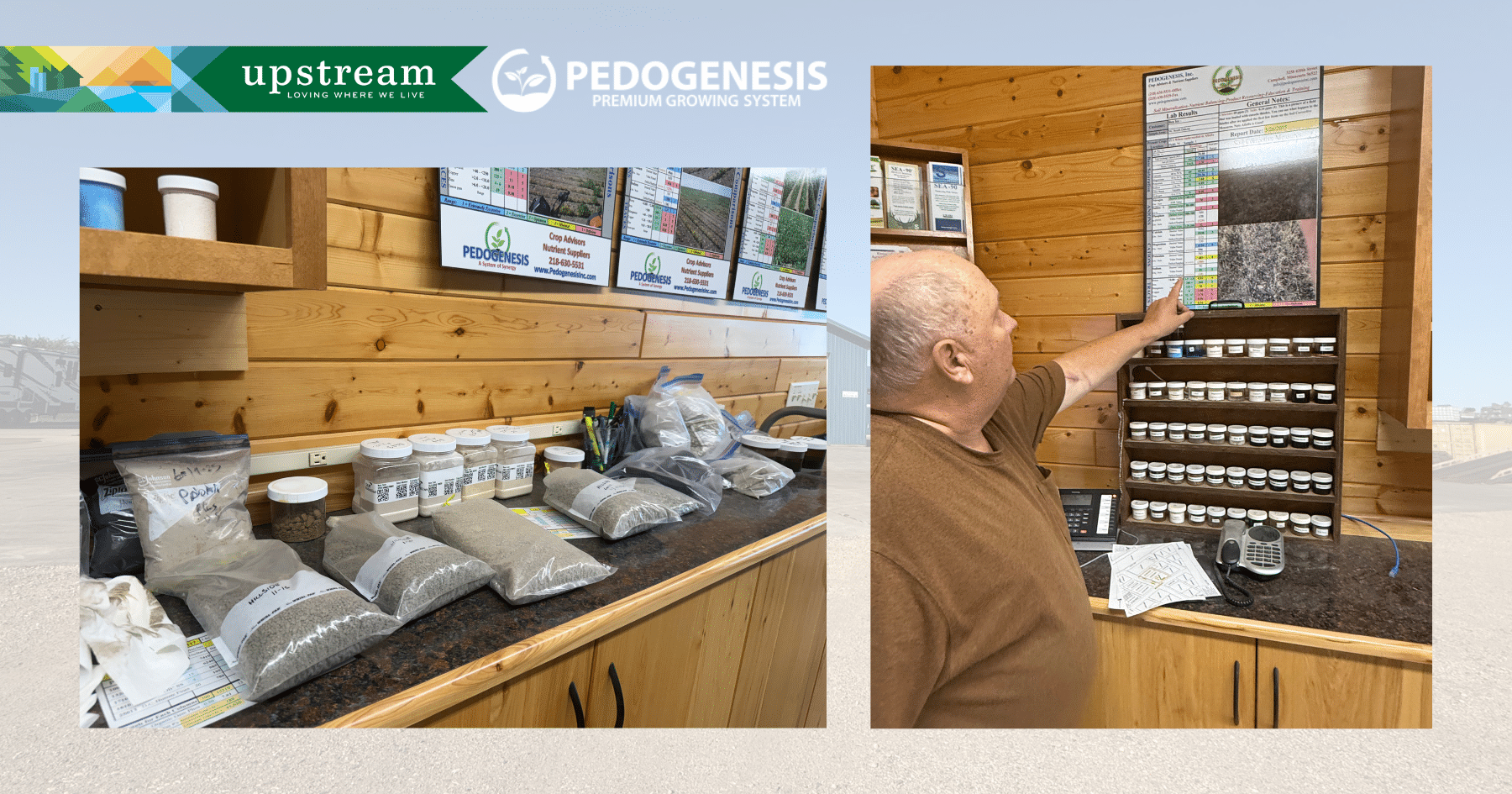
As the founder of Pedogenesis Inc., Nelson has spent decades developing a farming approach centered on soil testing, mineral balance, and biological activity. Drawing on the work of soil scientist Dr. William Albrecht and his own experience, he encourages growers to look beyond conventional fertilizer programs and examine what their land actually needs.
His philosophy is rooted in a personal experience with failure and a determination to understand why.
Nelson studied at the University of Minnesota and went on to farm himself. At first, things appeared promising. “The first year was my best crop,” he recalled. But as he continued farming and increasingly applied what he had learned in college, his results deteriorated. Within five years, the bank had taken over his farm.
“I started thinking to myself, ‘Well, wait now. That didn’t work for me,’” Nelson said.
The experience left him questioning a system in which farmers could invest heavily in inputs and still struggle to remain profitable. Rather than accept that outcome, he began searching for another way to understand the relationship between soil, crops, and farm economics.
Learning to look at soil differently
A pivotal moment came in 1991, when Nelson met Neal Kinsey, a soil consultant who taught methods influenced by Albrecht’s research. Nelson recorded Kinsey’s presentations, collected educational materials, and began studying the principles more deeply. Those recordings and their associated educational work helped preserve knowledge that Nelson believed more farmers needed access to.
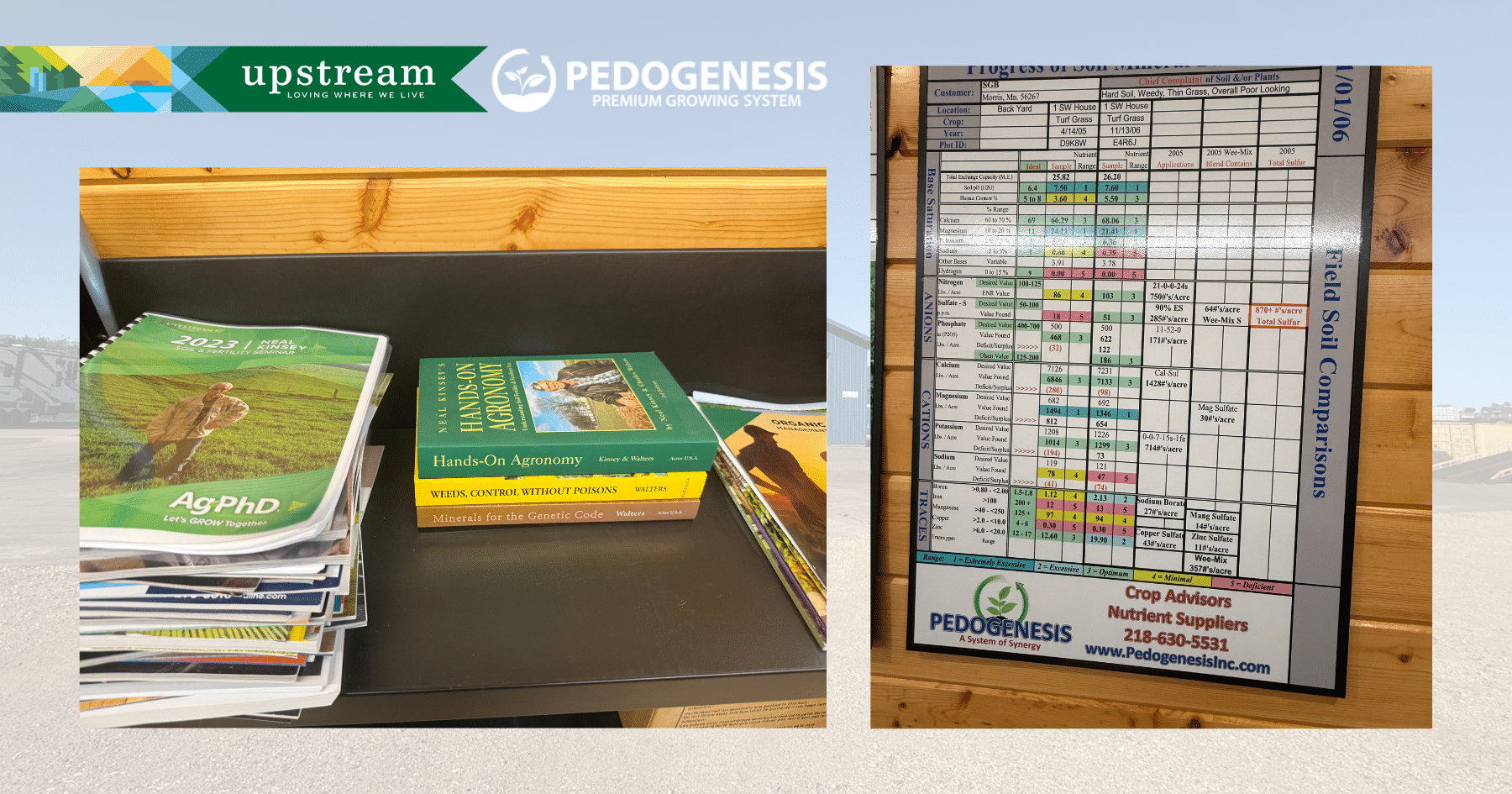
Albrecht’s approach emphasized examining soil fertility through mineral relationships rather than relying on a narrow set of conventional measurements. Nelson adopted that perspective and developed his own consulting practice around evaluating individual fields and recommending amendments based on their conditions.
He often compares soil management to repairing machinery. A farmer would not assume every tractor needed the same parts or adjustments; the equipment would first be inspected to determine what was worn, damaged, or missing.
“Soils are no different,” Nelson explained.
In his view, a soil test should be interpreted in context, with attention to the minerals present and their relationships to one another. He argues that farmers can overlook important limitations when they rely on a few familiar measurements or apply the same fertilizer strategy across different fields.
Nelson says his work is intended to address underlying problems rather than repeatedly treat their symptoms. He describes the process as a kind of rehabilitation: identify the deficiencies, make a plan, and improve the soil over time.
“I look at myself as a coach,” he said. “If you want to be the best of the best, you have to have a game plan.”
A different path to crop production
Through Pedogenesis Inc., Nelson works with both organic and conventional growers. He says his recommendations can sometimes reduce fertilizer costs and the need for fungicides, insecticides, and herbicides while improving yields. Those are his reported results, and individual outcomes depend on field conditions, management, crop choice, and the resources available to a farmer.
Nelson encourages growers to begin with a manageable trial rather than immediately changing an entire operation.
“You don’t have to trust me, you don’t have to believe me,” he tells prospective clients. “But take a piece of property. Most farmers are farming tens of thousands of acres. Take a couple quarters and do it the way I ask you to do it. Let the results speak for itself.”
He generally recommends evaluating changes over three to five years, allowing farmers to spread costs across seasons and observe how the land responds. Some adjustments may produce visible differences sooner, he says, but his larger goal is to develop a sustainable plan rather than promise a quick fix.
That gradual approach matters because farm economics leave little room for expensive mistakes. Nelson recognizes that growers must weigh the cost of amendments against potential returns. He also believes they need to be willing to question familiar practices.
“You have to change your thinking, which is the hardest thing to do,” he said.
From soil to gardens, livestock, and food quality
Nelson’s work extends beyond field crops. He has consulted with Hutterite communities and other growers who raise vegetables, grains, and animal feed. In these operations, he emphasizes building soil fertility to support productive gardens and crops that people want to eat.
He recounts working with gardens that had struggled to produce abundant vegetables before his soil-management recommendations were introduced. In some cases, he says, subsequent harvests became so plentiful that growers had more produce than they could readily distribute.
The difference he values most, however, is not size alone. It’s the flavor.
“Flavor, it all comes down to flavor,” Nelson said, describing the response he has heard from people who eat produce grown through his program.
He believes improving mineral availability and soil biology can contribute to more satisfying food, although the nutritional quality of crops depends on multiple factors and requires appropriate testing to establish specific claims.
His interest in food quality also informs his work with livestock. Nelson raises free-range chickens, supplements their feed with non-GMO organic feed, and provides mineral-rich rock powders that he says allow the birds to select additional minerals. He points to their strong eggshells and richly colored yolks as visible signs of the system he has developed.
He also describes working with a Minnesota hog producer who, according to Nelson, substantially reduced piglet losses after changing feed rations and mineral supplementation. These examples reflect Nelson’s experience and interpretation; they are not, by themselves, controlled evidence that mineral supplementation explains every reported outcome.
Still, they illustrate the breadth of his philosophy. For Nelson, farming is an interconnected system in which soil management affects the crops grown, the feed produced, and ultimately the animals and people who depend on that food.
Rethinking organic and conventional farming
Nelson does not believe that a farm is automatically producing high-quality food simply because it is certified organic. Organic certification establishes requirements for production practices, but it does not guarantee a particular level of nutrient density, flavor, or soil fertility.
“I don’t like organic any worse than I hate chemical,” he said, explaining that his concern is whether growers are addressing the actual condition of their land.
His own program can be used by organic and conventional farmers, depending on the materials and practices involved. He argues that the goal should be to build productive soils and reduce unnecessary inputs, rather than assume a label or a standard fertilizer formula answers every question.
His views challenge conventional agricultural practices, and some of his broader claims about mineral balance, disease prevention, and human health remain matters that require independent scientific evaluation. Soil fertility is important to crop production, but it does not mean that all plant diseases or animal illnesses can be prevented through nutrition alone.
Nelson’s central argument, however, is practical: farmers should understand what they are applying, why they are applying it, and whether it is delivering measurable results.
Building a better local food system
Nelson sees an opportunity to connect soil-focused farming with stronger local food markets. He wants more growers to produce food for people—not only commodities for bulk markets—and to develop dependable relationships with grocery stores, restaurants, and community cooperatives.
That vision would require more than successful growing methods. Farmers would need coordinated harvesting, storage, processing, distribution, and marketing. Nelson believes producer cooperatives could help share the costs of equipment and infrastructure while giving growers access to larger markets.
He also worries about the loss of practical agricultural knowledge as experienced consultants retire. He would like to see more education, mentoring, and collaboration so that farmers can learn the principles and eventually manage their own programs with greater confidence.
After decades of experimentation, Nelson remains convinced that the soil deserves closer attention. His message is not that every farm can follow one identical recipe, but that every farm should be understood on its own terms.
“You have to have the right knowledge for the right piece of equipment,” he said of soil testing and agricultural management. The same principle, he believes, applies to the land itself.
For Nelson, the future of farming depends on rebuilding that understanding—one soil test, one field, and one growing season at a time.